Wednesday, September 09, 2015

That's just Dopey - Leicester comes up short as Snow White goes solo


We Chelsea fans are eminent jesters. For years we have declared in song at home and away matches how "We all follow the Chelsea, over land and sea and..." - without anyone truly understanding why - "Leicester".

Various theories have circulated as to why the city of Leicester has been singled out so. One nefariously relates back to a time when Chelsea and Leicester City hooligans met on a regular basis to engage in forthright discussions about Middle East politics, global debt reduction and other weighty topics requiring the carrying of knuckledusters and nunchucks.

Another is that, on the M1 motorway, there was once a sign that read "The North & Leicester", which would certainly appeal to the supreme grasp of irony football fans are generally blessed with (and which arms them with opportunities to launch into comic routine at the sight of anything worth a giggle).

Until now, however, I wasn't sure why Leicester warranted such singling out. An inprepossessing city of 330,000 in England's East Midlands, and largely best known for being the birthplace of Gary Lineker (and the Walkers crisps factory that continues to employ him), and Sue Townsend's fictional teenager, Adrian Mole. Oh, and a football club which this summer eccentrically hired Claudio Ranieri to be its manager, which so far hasn't turned out too badly at all.

But, as I say, all that was until now. This week the city's famous music venue, De Montford Hall, has baited Daily Mail readers by announcing that its Christmas pantomime this year will be, simply, Snow White, as opposed to the more conventional Snow White And The Seven Dwarves.

This has nothing to do with any diva-like behaviour by the titular star, nor arts underfunding requiring cuts to the casting budget. No, the unconventionally minimalist title is due to the panto's producers not wanting to insult...um..."people of restricted height".

Yes, dwarves. According to the panto's producers, Snow White will have, instead, "friends" as they felt that the term 'dwarf' is "generally not a word that people feel comfortable with".

Warwick Davis, the actor who starred as himself as a dwarf actor in Ricky Gervais' Extras, as well as in the Star Wars and Harry Potter films, told the Leicester Mercury newspaper that he found the decision more offensive than any offence the term dwarf could cause: "Personally, I find it quite patronizing when people are offended on our behalf," he told the paper.

"I’m sure there are those out there who don’t like the term, but as a short actor I want to be given the choice about whether I appear in panto or not. I don’t want someone making that decision for me." He also suggests another purpose behind the production's decision - hiring child actors to play Doc, Grumpy, Happy, Bashful, Dopey, Sneezy and Sleepy instead of adult dwarf actors. Either way, it smacks of good intentioned but absurd political correctness.

Should Elvis Costello have recorded without The Attractions for fear of insulting fairground rides? Neil Young split from Crazy Horse to avoid offending owners of mentally instable nags? Dwarves are dwarves. They are not "persons of restricted growth", never call them "midgets", and though they might be OK with a term like "little person", it sounds silly. Dwarfism is also a well established medical condition, caused by a genetic disorder.

You could argue that excluding dwarves from Snow White is discrimination, but mostly, it would seem, it is the result of political correctness gone mad. Pantos were never the greatest of PC institutions, which was half the attraction of going to see them as a family, a guilty pleasure that might cause Granny to blush, but nothing worse.

True, pantomime producers have always tried to write topical gags into scripts, but there has been growing concern that political correctness has crept into the genre to its detriment. Characters like Sinbad and even Robinson Crusoe have been abandoned for fear of causing racial offence, while pantos based on traditional Grimm fairy tales have stopped for fear of scaring audiences...despite those audiences being perfectly comfortable watching Game Of Thrones or Twilight. There have even been pantos dropping the Victorian tradition of a female actor playing the 'principle boy' out of concerns over treading on sexual politics.

"You are getting to the stage where you are frightened to do anything as a joke," Tommy Cannon - one half of Cannon & Ball - told the Daily Telegraph in 2007 as the political correction of pantos appeared to be gaining momentum. "We used to do Babes In The Wood a lot and we'd play the robbers who kidnap the children and whisk them away in a pram. But people actually believed something was happening to the kids on stage and we would get complaints," Cannon said, adding that "People forget that this is panto and that sort of censorship is so wrong. These pantos are disappearing and they are not coming back."

The Grimms' original fairy tale may have been simply Snow White when it was published in 1812, but for almost the last 80 years, since it was Disneyfied, the seven dwarves have held equal billing without anyone feeling the need to ease anyone's discomfort about the diminutive condition. And, frankly, with dead children in the Mediterranean, barrel bombs and the wilful distruction of ancient relics and their custodians, there are many more valid things in this world we should be getting offended by.


Wednesday, September 02, 2015

Loan sharks - the curious case of Chelsea's three spare teams


Let's not, now, get into the full absurdity of the biannual transfer window, and the desperation yesterday of clubs trying to acquire last-minute reinforcements...or offload ballast.

There will be another time to question the IT literacy of staff at either/or Real Madrid and Manchester United, another moment in which to ask if Arsenal's "we did our business early" smugness will come back to haunt them (around January, most likely...). And only time will tell whether £58 million spent on Kevin de Bruyne is worth it, seeing as Manchester City were doing perfectly well beforehand.

But Chelsea? Last season they indeed did their business early - bought in the striker and creative midfielder they needed, got on with pre-season, came out of the traps like a rare gas at season's start and won the league. This season, however, things were left frustratingly late - and in the case of Pogba and John Stones, fruitless.

Nine players came in, of which Radamel Falcao, Asmir Begovic and Baba Rahman were straight replacements for, respectively, Didier Drogba, Petr Čech and Filipe Luis, while the other six - Pedro, Kenedy, Nathan, Danilo Pantic, Papy Djilobodji and Michael Hector - were added to bolster tired-looking midfield creativity and defensive weakness.

Chelsea's net outlay of just under £31 million might look smart under Fair Play rules, and especially within the context of the staggering £870 million spent by Premier League clubs as a whole during the transfer window. But it doesn't reflect one truly insane detail of its dealings in this summer's market: the club now has 33 players out on loan.

33 players. Three entire teams surplus to immediate requirements (and on top of the 'development squad' players the club has retained). While the business of loaning out players who either don't fit or need to develop their potential at clubs with first team opportunities makes some sense, Chelsea are starting to look like a cross between Hertz and an agency for supply teachers.

It has now become a standard Chelsea practice to bring in a player and then immediately farm him out on loan, a procedure exemplified best by the "must-have" goalkeeper Thiebaut Courtois getting shipped out to Athletico Madrid. Clearly, Chelsea brought him back as an exceptional talent, but could the same be said for the immense number of loan players who have been distributed throughout Europe like evacuated wartime children being sent into the countryside?

Some loans have made sense: Victor Moses signed a new contract with Chelsea before going out on a season-long loan to West Ham, though that presumably ensures the parent club some financial return if the loan is made permanent, as many expect. But Jamaica centre-back Michael Hector getting signed from Reading only to be loaned back doesn't make any sense.

Juan Cuadrado - loaned to Juventus - and Mohammed Salah - loaned to Roma - did make some sense, as they clearly weren't fitting in (though this surely reflects badly on the scouts who'd recommended them to begin with). But they are both further examples of the seemingly impulsive nature of Chelsea's acquisition strategy. Such as Dutch international Marco van Ginkel, bought from Vitesse Arnhem as, presumably, Frank Lampard's successor, only to end up loaned to Milan and, now, Stoke.

His near-namesake Marko Marin was another. Hailed the 'German Messi', the diminutive midfielder proved to be anything but, and, with only six appearances for Chelsea, he has been shipped off Sevilla, Fiorentina, Anderlecht and Trabzonspor, with nothing much to show for any of those loans.

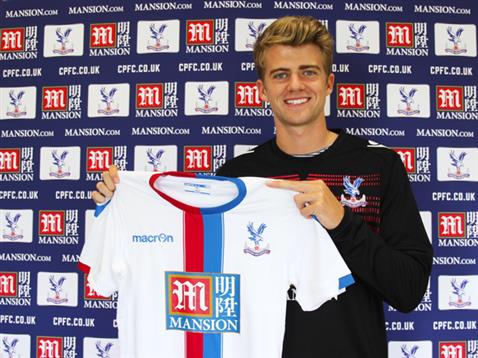
Chelsea and José Mourinho have, at various moments in recent history, made much of youth development. The club's junior teams have delivered trophies with the same degree of regularity as the senior squad, and yet still the likes of forwards Partrick Bamford (loaned to Crystal Palace) and Dominic Solanke (loaned to Vitesse Arnhem) continue to indicate an iron-strengthened glass ceiling at Stamford Bridge.

Indeed Vitesse - whose owner, former Georgian footballer Merab Jordania is close to Roman Abramovich - is fast becoming a satellite training ground for Chelsea, with Solanke, midfielder Lewis Baker, newly acquired forwards Nathan and Danilo Pantic, and winger Izzy Brown - all there for the remainder of this season.

While this might create some sense of surrogate team ethic for their parent club, former Arnhem boss Ronald Koeman - now at Southampton - says that this is ultimately not in Arnhem's best interests. "Iit seems to me like people have lost a connection with the club since this agreement [with Chelsea] has been in place," he said earlier this year. "It is difficult to have really the spirit in the team, I think, because all the young players come to play, but they still like to go back to Chelsea. I don't know if I can work in that. I don't know."

Clearly, though, Chelsea have some sort of strategy at work with Vitesse. The same goes for Belgian club Sint-Truidense VV and Championship side Reading, who have both had their fair share of the Blues' loan players. There's no doubt that a player like the 21-year-old Brazilian forward Lucas Piazon will get plenty of games at Reading, as well as learning from working under a manager like Steve Clarke, the former Chelsea defender and assistant manager. And when you look down the ranks of the 33 out on loan, spread out all over Europe, it is clear that many, if not most, have youth on their side.

But the same could have been said for Josh McEachran, long touted as a star for Chelsea's midfield and impressive product of the club's much-vaunted academy. After being loaned out to Swansea, Middlesbrough, Watford, Wigan and Arnhem, wound up being sold to Brentford in July for just £750,000. A pitiful sum, perhaps, for a supposedly talented 22-year-old, when you have Manchester United taking a £36 million punt on 19-year-old Anthony Martial.

Monday, August 31, 2015

It's the Monday Moan...again

Twitter/Chelsea FC
I'm determined to not let this become a thing. But in case you hadn't noticed - and there are aliens on worlds light years away who've been following this saga with ease - the defending Barclays Premier League champions have been crap.

Those of a less churlish mood might wish to add "relatively speaking", pointing out that, yesterday morning, there would have been hungover pub teams on Wanstead Flats getting hammered 9-0 by equally dilapidated sides who could be justifiably described as crap. But few of them will be earning in excess of £100,000 a year, let alone that amount per week.

So do, please, afford me the opportunity of a cathartic release Monday morning after yet another "indifferent" performance. Less polite terms are also available.

Because, by comparison to the standards established in the opening 90 minutes of last season, and which remained in place until at least Christmas, Chelsea have, over the first competitive games of the new term, been unquestionably lousy.

First, though, credit must be given where it is due. On Saturday, Crystal Palace - like Swansea on the opening day - pitched up at Stamford Bridge with purpose and intent. Alan Pardew had organised his players to probe, to exploit weaknesses, to be quick to attack on the break and efficient in closing Chelsea down. Everything, in fact, which José Mourinho had Chelsea doing in the first half of last season, when they galloped away with the Premier League leadership.

On Saturday afternoon - in a rare 3pm kickoff - Palace could not have been faulted. Chelsea, on the other hand... In his post-match interviews, Mourinho was unusually - actually, let's just call it "relatively" - contrite. Apart from a slight dig at refereee Craig Pawson, there were no unwarranted or eccentric deferrals of blame. No members of the medical staff were accused of misunderstanding the sport, no conspiracies were alleged.

Instead, Mourinho talked of "three or four" players "not performing to an acceptable level". He didn't name them, of course. Perish the idea of Mourinho calling out the inadequacies of one his club's employees in public. But those of us watching from the stands could see quite clearly who has not been performing acceptably throughout the first four games of the season - and it is more than three or four: Ivanović, Fábregas, Matic, Cahill and, dare I say it, Hazard.

Elevated to vice-captain as, presumably, reward for his seniority (though his age now puts him in the category of single-year contract extensions for over-30s), Ivanović has been nothing like the dependable right-back he was last season. Indeed it is frightening just how fast his decline has taken. But for almost every one of the nine goals Chelsea have shipped over the first four games, the 31-year-old Serb has been partially at fault, appearing reluctant to close down strikers with the authority and accuracy he did last season.

Fábregas may not have been so costly in front of goal, but his ineffectiveness in creating the opportunities he was gifting Costa last season has been a glowing, pulsating open sore this season. On Saturday we just wished for him to be taken off, such was his indecision and obvious inability to contribute instinctively telling passes. Indeed, apart from the one tackle late in the game that ultimately contributed to Falcao's lucky but well-taken headed goal, nothing Fábregas seemed to do carried any merit. Such a sad state of affairs for a gifted talent who brought genuine smiles to the faces of Chelsea fans in the first half of last term.


Matic was a revelation when he rejoined the club that had hastily offloaded him three seasons before. After the club had failed to properly replace Claude Makele in the holding position - and, no, John Obi Mikel never will - Matic was the key to Chelsea's imperious defensive capability last season. "Parking the bus" is such a moronic term when you have a holding midfielder like Matic, who policed Chelsea's final third so assuredly, compensating for Terry's lack of pace but at the same time ensuring the captain could put up the brick wall that, frankly, did the job in easing pressure on the goalkeeper. But, like his Serbian teammate Ivanović, Matic has been out of position too often, sloppy in his distribution, and another worryingly off-form version of himself just a few months back.

Most if not all Chelsea fans were delighted by the rare arrival of an Englishman when Gary Cahill joined from Bolton. From a performance point of view, there was genuine pleasure at the sight of a centre-half who could partner John Terry in the same manner that Ricardo Carvalho had done during the first Mourinho spell in charge. But take Terry out of the equation - as was the case on Saturday with the skipper suspended - and Cahill looks lost. Yes, he huffs and puffs and applies himself to the cause as all English central defenders do, but rarely at present in positions he should be in.

We can talk all we want about Chelsea bringing in Everton's John Stones as Terry's long-term successor, but right now, Chelsea need a defence that communicates with each other, which is alert and has the pace to deal with teams like Swansea and Crystal Palace who intelligently sent their forwards up to harass Chelsea's visibily ineffective defence.

It is not all doom and gloom: the arrival of Pedro has put a smile on the faces of Chelsea fans, and though he didn't get on the scoresheet again this weekend, the cleverness and quality of the 28-year-old Spaniard was again evident. And, late on, when Mourinho went for broke with his subsitutions, the insertion of Ruben Loftus-Cheek - presumably now recovered after his 'tough love' Mourinho mauling during pre-season - added strength to the holding position that, worryingly, Matic has been lacking.

Kenedy - Twitter/Chelsea FC
But most pleasing of all was the arrival of Brazilian teenager Kenedy, who spent his debut zipping about the left side in much the same way as Eden Hazard should have been. Except that he hasn't.

Ever since he wasted his chance to score against former teammate Petr Čech in the Community Shield at Wembley, something has not looked right about the Belgian. As with Ivanović, it has been frightening to see how a matter of weeks between the end of last season and the start of this one has seen Hazard's ability drop off.

There is some merit, however, in the idea that defenders have just sussed him out, and that they're better prepared for his mercurial runs into the box, and his attempts to whip in balls to Costa. But that doesn't feel like the full explanation.

"Will I accept this, cross my arms, sit in a nice chair and wait calmly for the performance level to be back?", Mourinho told reporters after the Palace game. "No, I won’t. I have to work, I have to react, to analyse and if I feel the players are not in a condition to react and give more, I have to make changes. I have never had a problem with that." That, though, may be called into doubt. It was painfully clear on Saturday where the weakness was, and what the solution should have been.

"A lot of it is down to the opposition finding weaknesses," said former coach Ruud Gullit on Match of the Day on Saturday night, who highlighted how Crystal Palace had indentifed Chelsea's right-side as the area to exploit. Throwing money at the problem isn't, however, the solution. Yes, with the transfer window slamming shut tomorrow, Chelsea could go bollocks-out and splash £100 million on Pogba and Stones. But that will not necessarily restore the team to the fighting strength of Manchester City, or indeed the teams around them, like Palace and Leicester, who logically shouldn't be there at all.

No, regaining the eight points City have over Chelsea takes something else, something that has worried me in the past with Mourinho's teams when they've been out of sorts: mentality.

During the Portuguese's first season back at the club there were games away to Palace and Aston Villa which ended in defeat and shouldn't have done. On both occasions, Chelsea had the technical edge, the fitness and the tactics. But on both occasions, their heads weren't right. Likewise against Bradford in last season's FA Cup, when the League One side came back from 2-0 down at Stamford Bridge to remarkably win  4-2. You only do that against so-called grander teams when they are playing with only half their heads.

John Terry speaks frequently about Mourinho's winning mentality and his inability to deal with defeat. "When I win, I want to win again, I want to win more," he is quoted in today's Times. "If you win [the title] once and the next season you are not on fire, not ready to at least fight for more, it is very sad." That may be the case, but it is now down to Mourinho to do something about it. He has the players - with more out loan if needed - to change things, to instigate a winning mentality that is patently lacking.

Many, if not most, Chelsea fans could probably do with not winning the Premier League again, if the team bags the Champions League trophy for only the second time in the club's history. But right now, that seems a long way off. 13th place in the Premier League table, and a negative goal difference of three is not a Chelsea that, in its recent history, will be recognisable or readily acceptable by anyone who follows the club.

Sunday, August 30, 2015

Can also go up: Foals - What Went Down

Experience has taught me that fans of indie music are thick skinned enough not to care what people think of their musical tastes. Indeed, they tend not to be bothered by the use of "indie" to begin with, and certainly no more than they worry about holes in their cardigans (let's get that stereotype out of the way, right there...), or that they should have grown out of "student music" when they ceased being students (yep, that out of my system, too).

Because, what actually defines "indie music"? Is it the misconception that it is made by apparently morose and Vitamin D-deficient guitar bands? Or the more literal definition, that it is made by bands on record labels lacking the financial clout - or dark, satanic corporate overlords - of mainstream record companies?

There is, though, still something perjorative about the term "indie", implying vegetariansim, late night John Peel sessions, and sticky-floored student union gigs by The Wedding Present, from which I'm convinced my hearing is only recovering from now at the age of 47.

The cold hard truth, however, is that "indie" is no less or no more just one of those music biz pigeonholes. After all, Coldplay, New Order, Manic Street Preachers, Oasis, Radiohead, Mumford & Sons, Paul Weller, Elvis Costello and Ian Dury & The Blockheads were all once - and some still - on independent labels, and yet their mainstream commercial success couldn't make them further from indie as a concept.

Picture: Nabil

This leads me to Foals. Who are signed to Warner Brothers. And yet few journalists seem capable of writing about them without using the phrase "indie darlings". Perhaps it's because some members of the quintet have beards (although find any mainstream band the 1970s without facial hair); perhaps it's because they are a guitar band with a bespoke brand of intensity. The Beatles, as I recall, were a guitar band, and when they got into it could be quite intense.

I could go on, but I won't because there is the matter of Foals' new album What Went Down to consider. Following on from the brilliant Holy Fire two years ago, the Oxford band have returned emboldened with an album that strips away any ridiculous sterotyping about Pot Noodle container-strewn bedsits, instead delivering broad, festival-ready guitar rock with an undercurrent of lyrical darkness.

Holy Fire may have been more of a vibey affair, but What Went Down releases the brakes and Foals go for it, with pulsating riffs, stomping drums and tight, infectious grooves that rarely let up. On standouts like Albatross and Night Swimmers, Snake Oil, the title track and Mountain At My Gates (the latter two being the first singles off the album) Foals pile on layers of immensely fruggable intensity, a festival performance even within the stilted atmosphere of a studio recording.

Foals' Yannis Philippakis - picture: La Fabrique/Nabil

Comparable with, but more varied than Editors or Bombay Bicycle Club, Foals have moved themselves closer to the elite of - yes, if I must use it - indie acts. I read somewhere that Talking Heads are amongst their influences, which goes a long way to explain Foals' energy. 

The Heads are, in my view, one of today's most media-neglected 'heritage' bands, and their legacy deserves much better recognition. The sad fact is, once you get branded "art rock" you are instantly regarded as musical smart arses, a little too clever for their own good. And that's the problem with music's insistence and obsession with pigeon-holing. I don't know what your definition of "indie" is, but on the evidence presented by What Went Down, Foals have just entered the big league.

Thursday, August 27, 2015

Dear Dear, we're cramming them in


It took me more than three years to persuade British Airways that commencing an e-mail to a frequent flyer with the expression "Dear Dear" was not the best way to "optimise customer engagement", as the airline's marketing types would call it. But, for far longer than it should have, whenever BA's Executive Club wrote to me, there it would be: "Dear Dear Mr. Poulter."

Of course, a less bothered me would have lived with what was obviously the result of a computer glitch. But as someone whose job involves managing a company's reputation, I thought that, out of professional brotherhood, it would be collegial to point out that this glitch actually made BA look stupid, and gave the impression that computers, not people were interacting with the airline's paying punters.

Worse, the e-mails lacked any means of writing back to the "James Hillier" who apparently sent them. No return e-mail address, no postal address, no phone number with which - with genuine intent to help - I could point out the silliness of the "Dear Dear" salutation.

Eventually, and out of sheer frustration, I resorted to Twitter. Initially, signs were good. A slightly cheeky tweet from me resulted in a direct message from BA's social media team promising to look into it. Shortly after I received this assurance I found myself mysteriously upgraded to business class on a flight from Los Angeles. You can draw your own conclusion as to why.

In fairness, the "Dear Dear"s have now stopped. Someone, somewhere in customer marketing has solved the glitch. British Airways is by far, however, not the worst when it comes to customer service and in fact, for the most part (apart from a disastrous lost baggage saga in Chicago two years ago) it is the airline I prefer to travel with the most. But the e-mail issue highlighted how dealing with airlines has become more and more complicated, and less and less about dealing with living, breathing human beings.

This showed itself acutely a few weeks ago when I tried - foolishly - to contact Air France in the first week of August to fix a problem with a booking I'd made with Flying Blue frequent flyer miles.

Being the start of the marathon French holiday season, Air France was clearly understaffed when I tried to solve the issue over the phone. Calling a number sounds simple enough, but it took three attempts (including one which resulted in me getting cut off) to speak to someone - as opposed to a recorded message - and when I did, I was advised that, for help in English I would need to call back from a phone in the UK...!

On pointing out that I was in France trying to book a flight to London, I got cut off again. Eventually I got through to a very nice Romanian lady called Marina who couldn't have been any more helpful.

It would be unfair to single out Air France. Like most of the major 'flag carriers' they are no better and no worse than any other national airline. But, as with all of them, the customer experience is being increasingly sacrificed for cost.

Air France and United Airlines, for example, now have passengers do the work that check-in staff used to do: checking in. At Charles De Gaulle airport in Paris, Air France economy passengers have to use unmanned terminals to check-in, print out their boarding pass and print their own baggage label...before then taking it all to a drop-off desk where a member of staff checks the bag onto the conveyor belt. The same with United at Newark International in New Jersey.

Quite what this achieves is lost on me. The 'fast bag drop' queues are just as long, if not longer, than they would be with traditional check-in desks. And, of course, somewhere in the marketing communication, the airlines will call this an improvement to the customer experience. What they're actually doing, of course, is saving money to make money, the major imperative of all airlines.

We've long abandoned the notion that flying is a luxury. In fact, unless you're privileged enough (or have a generous employer) to fly in first or business class, the majority of us will endure flying in economy. Which has become a living hell.

Mass air travel is now a long way from those 1960s images of Pan-Am and BOAC cabins, full of pipe-smoking Cary Grant lookalikes in blazers, with their female companions, decked out in twinsets and pearls, ordering gin and tonics from poster girl stewardesses, as they were then known.

Today, it is a cramped ordeal, worsened by passive-agressive duals over armrests and reclining seats, and shrinking overhead locker space due to inconsiderate Muppets bringing ever larger bags onboard just to save them a 20-minute wait at the other end.


Bit by bit, and by stealth, airlines are cramming us in like never before, and the so-called low-cost revolution hasn't really benefitted anyone. By far the worst offence is the reconfiguring of cabins to include more premium seats (i.e. business class and 'premium economy'), while adding even more seats in economy. On regional flights, that will mean more rows, but on long-haul, airlines are even adding seats to the rows themselves, with narrower seats enabling ten-seat rows on wide-bodied jets.

As pointed out in Bloomberg Business Week some months ago, Bill McGee, an airline industry veteran and contributing editor to Consumer Reports, noted that: "The roomiest economy seats you can book on the [United States'] four largest airlines are narrower than the tightest economy seats offered in the 1990s."

Indeed, as the airline industry continues to consolidate through mergers, acquisitions and alliances, the competitive need to differentiate is gradually eroding. There is even talk of one American airline, Delta, introducing a fifth, 'sub-economy' class, which presumably is just a row of wooden benches and a communal bucket for a toilet.


British Airways does, however, appear to have recognised that passenger comfort is, after all, a means to boost income, not just make more by cramming more of us in. The airline has announced that its new fleet of Boeing 787-9 Dreamliners will have economy seats half an inch wider than those on their 787-8 Dreamliner model that came into operation in 2013.

When Boeing launched the Dreamliner it promised a "revolutionary" aircraft featuring innovations like mood lighting and improved air quality to make the passenger experience more enjoyable. When I flew on BA's Dreamliner to Newark last year, it was anything but enjoyable, and was so cramped in economy that I'd wished I'd flown on one of United's ageing Boeing 757s and 767s that fly the same route.

BA has now admitted that seating arrangements on its initial fleet of Dreamliners "felt a bit tight", and that it, along with other 787 operators, had tried to squeeze too many nine-seat economy class rows in, instead of eight seats as Boeing had originally intended for the aircraft. And so, the new BA 787s will offer an economy class seat pitch of 32 inches instead of the current 31, and will feature wider seats (at the expense of aisle width) of 17.3 inches instead of the current 16.8.


I would rather airlines saved money on other things to ensure that the most important aspect of flying - the seat - was as comfortable as possible for the price of the ticket booked. In the United States - where airline comfort and service quality has always, in my view, been a long way behind Europe - travelling city-to-city, across country or even just across a state, is an ordeal.

Even JetBlue - an airline that bucked the industry by offering comfortable leather seats and inflight satellite TV, as well as not putting fees on everything - is joining the club of American carriers putting more and smaller seats onto their planes, decreasing leg room and introducing a range of tarriffs for anything from bags to WiFi.

No doubt this trend towards 'less-is-actually-less' will be appreciated by Wall Street's speculators (though I doubt many of them fly economy class...): in 2013 the main US airlines earned more than $30 billion from add-ons alone, items that would have once been incorporated into the ticket price.

There is a strong argument that some extras are justfiable: while I object to being charged exorbitant rates for WiFi by hotels (for whom it is part of their infrastructure overhead, like lighting and heating), I don't see it as a problem to charge for it inflight, where it is a premium feature.

If being offered sandwiches and drinks for a reasonable price keeps ticket prices down, I'm fine, so long as you don't have to sit next to the guy eating the pizza he brought with him for a five-hour flight from New York to San Francisco. But once airlines start gouging for just a handful of kilos over a baggage allowance, or charge you for "the extra legroom" offered by an exit row when, by law, every flight has to have someone sitting in those seats, we have a problem.


And then there is the bizarre practice of overbooking. You choose your flights, based on how they fit your plans, you pay for them, turn up at the airport at the time you were asked to be there and then discover that your seat has been given to someone else, and would you accept vouchers to take a later flight?

This is nothing but hedging: airlines bet on the fact that a certain percentage of passengers will always fail to turn up for a flight. But with the majority of these being business travellers on expensive, flexible tickets, it's always the poor mug in economy who gets bounced.

There are, of course, plenty of valid arguments to justify airlines doing all this to us, their would-be loyal customers. In principle, all these measures - fees, overbooking, ten-seat economy class rows - are designed to maximise profits while minimising costs, which should mean everyone - passengers, airlines and their shareholders alike - get to benefit. But, really, do they?

Some of us have to travel, either for work or to visit familes. Others choose to travel because they can. None should be penalised. Robert Louis Stevenson clearly didn't have the era of low-cost aviation in mind when he posed the notion that "To travel hopefully is a better thing than to arrive". These days, you can't wait to get off the plane.

Tuesday, August 25, 2015

Tramps like us: the 40th anniversary of Born To Run


My shot at the title, a 24-year-old kid aimin'
at "the greatest rock'n'roll record ever."

Being feted as "the new" anything is often more curse than blessing. And so this was proving to be so when, 40 years ago today, Bruce Springsteen released Born To Run, the album he hoped would be "the greatest rock ’n’ roll record ever”.

In 1972 Springsteen signed a deal with Columbia Records, the same stable as Bob Dylan. The man who'd signed him, John Hammond, had also been responsible for discovering Dylan (not to mention Billie Holiday and Aretha Franklin), and clearly saw something of the former Robert Zimmerman in the scruffy-looking singer-songwriter from Freehold, New Jersey, who'd auditioned alone with just an acoustic guitar.

"The kid absolutely knocked me out," Hammond told Newsweek in October 1975. "I only hear somebody really good once every ten years. Not only was Bruce the best, he was a lot better than Dylan when I first heard him.”

Inevitably, this led to Springsteen being cast as "the new Dylan", not helped by early CBS ads even comparing the two. Lyrically, they were clearly cut from similar cloth, neither caring much for trite pop, but instead telling intricate, character-driven stories that reflected the human condition.

The marked difference was that Springsteen’s music was a layering of influences: the restrained emotion of Roy Orbison, the cinematic, Saturday night melodrama of Phil Spector’s Wall of Sound, the rawness of Presley's rock’n’roll, the R'n'B of Solomon Burke. This was married to noirish storytelling, with Springsteen drawing on his beat - the seaside towns of the Jersey Shore and the bars of Greenwich Village where he'd honed his songwriting.

The first two Columbia albums - Greetings From Asbury Park, N.J. and The Wild, The Innocent & The E Street Shuffle - presented characters like Crazy Janey, Go-Kart Mozart, Spanish Johnny and the Magic Rat, Through them, Springsteen cast himself as balladeer, animating a landscape of cars, diners, leather jackets and girls named Mary, located somewhere between Rebel Without A Cause and the reality of working class New Jersey in the early 1970s.

The albums were received reasonably well but failed to match sales expectations. The Dylan reference may not have helped, either: "I never needed another Bob Dylan, not having had much time for the first one," wrote Sandy Robertson in Sounds a few years later. "So when I started copping eyefuls of all these Zimmerman comparisons, circa '73 when Greetings From Asbury Park N.J. was released, I was more than a little dubious about Bruce Springsteen."

In truth, many were dubious about Springsteen, including Springsteen himself. Such self-doubt would be part of the go-for-broke attitude that made Born To Run such a labour of love for all concerned. It took 14 months to record, with Springsteen obsessing over every detail, such was his paranoia that delivering a dud album would see the end of his recording career.

"Bruce was obsessive,” producer Mike Appel recently told the New York Post. "He tried everything because he was frightened of not living up to everything he could live up to. We just had to do it, because we had nothing to fall back on. Sometimes that’s the best thing in life."

The pressure on the project wasn't helped by John Hammond retiring midway through the album's recording, leaving Springsteen with new Columbia suits to impress.

Relief of a kind came from Boston music critic Jon Landau - who would, a whole year later play an even bigger part in Springsteen's life and Born To Run's release - when he declared, after seeing Springsteen live: "I saw my rock ‘n’ roll past flash before my eyes. And I saw something else: I saw rock and roll future and its name is Bruce Springsteen."

It's a much-repeated quote, and while there's no doubting its earnestness and impact, it may have also heaped further expection on its subject.

Not that Springsteen himself at the time, minded: "I was trying to find that spotlight, to be noticed, to be talked about," Springsteen explained in the documentary Wings For Wheels, "That's what I felt inside of me and what I wanted to communicate. I had a lot of ambition."

Ambitious, he may have been, but work on Born To Run went on and on, putting strain on long-standing friendships between Springsteen and the core members of his E Street Band - pianist David Sancious, Roy Bittan (who replaced Sancious during recording), saxophonist Clarence Clemons, organist Danny Federici, bass player Garry Tallent, drummer Ernest Carter and his replacement, Max Weinberg.

Just the album's title track took half a year to record, as Springsteen built it up from a relatively simple arrangement based on a guitar riff he'd come up with in his bedroom to something epicly Spectorish, with strings, multiple guitars, keyboards and even a glockenspiel. Springsteen's fastidiousness had no bounds as he obsessed about everything - even making endless changes of amplifiers just to get 'that' sound. On Jungleland, the album's closing song, Clemons spent 16 hours recording the sax solo to ensure that it rigidly met his boss's exact prescription.

"We had a lot of fun...when we weren't suffering!”, Springsteen says in Wings For Wheels, although Steve Van Zandt - who came in at a later stage of production - half jokingly said: "Fun is not a word I'd use. If you spend six months on one song something's not going right."

Production on the album had begun in May 1974 at 914 Sound Studios in Blauvelt, a small commuter town north of New York City. With the album still far from complete, towards the end of the year Springsteen and the E Street Band went out on the road to try out a few of the new songs live. This resulted in even more ideas for new arrangements of existing songs, as well as drawing the dismissal of the song Born To Run by a CBS suit who referred to it as as "born to crawl".

With no sign of a finished album, recording resumed in early 1975 at The Record Plant in New York City. Landua was drafted in - and onto Mike Appel's turf - to assist in producing and creativity. Van Zandt was also brought in to assist with guitar work (although his major contribution was his expert brass arrangements on the R&B stomper, Tenth Avenue Freeze-out).

Still, studio time continued to be arduous. Jimmy Iovine, then an engineer at The Record Plant (now known as co-creator with Dr. Dre of Apple's Beats business), recalls resorting to desperate measures to survive, especially Clemons' marathon session for the Jungleland sax solo: "I had a piece of Wrigley’s spearmint gum, took the gum out of the wrapper and I chewed on the aluminium foil," Iovine reveals in Wings For Wheels. "The pain was so severe that I knew it would wake me up!".

Even when everyone thought they had a final album, there was still more strife to come: in July 1975, Springsteen, listening to the master tape in a Pennsylvania hotel room decided that the album wasn't fit for muster and threatened to throw it into the hotel swimming pool in disgust. Mike Appel convinced him otherwise.


And so, on August 25, 1975, one of the greatest albums of the rock era was released. Whatever blood, sweat and tears, not to mention personnel and friendships, Springsteen went through to deliver it, it stands up as a remarkable piece of work.

Released in a year that, in mainstream rock and pop terms had little going for it - bloated, cocaine-fuelled West Coast career filler and the unsatisfying early stirrings of punk - Born To Run was a concept album in all but name. In post-Vietnam America, with an approaching fuel crisis and the shadow of urban riots in the early '70s still evident, the album gave Springsteen an outlet to explore opportunity, freedom and escape - "We've got to get out while we can". Even its cover - with Eric Meola's iconic photograph of Springsteen draped on Clemons' shoulder - suggested that music and camarderie offered an escape tunnel for ambitions.

"As a songwriter," Springsteen wrote in the book Songs. "I always felt one of my jobs was to face the questions that evolve out of my music and search for the answers as best as I could find. For me, the primary questions I’d be writing about for the rest of my work life to form in the songs on Born To Run ('I want to know if love is real'). It was the album where I left behind my adolescent definitions of love and freedom."

He explains: "Thunder Road [with a title borrowed from a 1958 Robert Mitchum movie] opens the album, introducing its characters and its central proposition: Do you want to take a chance? On us? On life? You’re then led though the band bio and block party of Tenth Avenue Freeze-out, the broken friendships of Backstreets, out into the open with Born To Run, and into the dark city and spiritual battlefield of Jungleland."

After such a long development time, to everyone's relief, Born To Run was released to instant acclaim, becoming Springsteen's first Top 10 Billboard album (with a little help from Appel leaking a copy of the album to radio stations to create buzz).

Columbia Records put the entire might of their publicity machine into selling it, which saw Springsteen appearing on the front cover of both Time and Newsweek magazines in the same week in October 1975, the first major rock artist to achieve such a double, and the first entertainer since Liza Minelli in her Cabaret days.
Arriving in London that same month for a seminal show at the-then Hammersmith Odeon, Springsteen encountered record company posters declaring "London’s Finally Ready for Bruce Springsteen!". Ambition may have fired Springsteen from the beginning, and perfectionism and obsessiveness played their part, too, in making Born To Run happen, but now it had happened, the now-26-year-old from Freehold still succumbed to his modest roots, the product of being of a generation that saw only vulgarity in self-promotion.

Be that as it was, Bruce Springsteen - The Boss - had arrived, not only in his native land but on foreign soil, too. Ambition carried Springsteen through, but there was something more than this that those around him in the early days knew made his ultimate success inevitable. "I remember thinking that what he had was unstoppable," David Sancious, the original E Street piano player. "It was going to happen, one way or another."

Although it would be another entire decade before Springsteen would establish himself as a global superstar, thanks to another 'born' album, Born In The USA, Born To Run was the propellant of an unstoppable career which, 40 years later, is still as creative and commercially vibrant as ever.

It may have undergone a difficult, some might say recklessly long gestation, but Born To Run established Bruce Springsteen as a unique artist in the rock and pop world. Commercial, without selling out; edgy, without scaring old ladies; respectful of the pop culture of his youth without being anachronistic. 40 years on, he's still doing all of that, and uniquely, amongst his peers, with the very same earnestness that brought Born To Run to fruition in the first place.

Monday, August 24, 2015

A MANbag...? What a carry-on...


Lord knows what Lady Bracknell would have made of modern France. Not a great deal, if her indignation over Jack Worthing's admission that he'd been found in a handbag is anything to go by.

But a manbag? The metrosexual accessory was thrust back into the spotlight last week by an easyJet passenger getting tasered - yes, tasered - for refusing to adhere to the airline's apparently more draconian-than-I-realised regulations for carry-on luggage. And as if receiving 50,000 volts wasn't bad enough, the 37-year-old flying from Gatwick to Belfast wound up being sectioned. "Following examination by doctors," said a police spokesperson, "he was detained under Section 2 of the Mental Health Act for admission into a psychiatric unit for further assessment and treatment in the interest of his own health, safety and protection of others."

Clearly, there is room for education on the matter. Here in France men routinely carry neat little bags strapped across their torsos. To be honest, I have never enquired as to what they carry in them (and, frankly, am unlikely to) though casual evidence suggests a mobile phone and not a lot else.

Either way, in France, Italy, Spain and other countries where sock-wearing is constitutionally optional and riding a scooter is considered chic and not at all regarded as the result of diminished testosterone levels, carrying such pouches is simply a practical means of carting around one's life essentials.

Being British, however, and genetically predetermined to be as unfashionable as my continental cousins are on-mode, I make do with pockets for this purpose.

This has much to do with the fact I'm an odd shape to begin with, and a few more unsightly bulges caused by keys, phones, wallets and coins won't make the slightest bit of difference whatsoever to my outline. Even owning a wallet is regarded by some of my countrymen as being a "bit of a ponce". Stuffing pockets with cash, credit cards and driving licences is simply the most blokeish means of carrying such items.

Clearly what I'm skating around here, in a characteristically British fashion, is the concern that manbag ownership constitutes some sort of assault on masculinity, or an affectation in the manner of Paul Weller during his Style Council era (Google it...).

Everyday, however, I walk to work carrying a bag containing my laptop, iPad, assorted electrical chargers, notebooks, pens, paperwork and other paraphernalia for my job, and because it's a "computer bag" everything is allright. Same when I take my classic Billingham shoulder bag on holiday, stuffed with cameras and guidebooks,

But strap on something small, practical and apparently not cheap, and you risk the same ridicule that certain cologne-drenched middle-aged men faced during the 1980s, when the 'man purse' made its appearance in Spanish holiday resorts - inviting muggers to a free-for-all on account of it being hand-carried, highly visible and full of cash, plastic and passports.

So, against this foundation of stereotypification and sexual insecurity, it may come as a shock to learn that British men are, today, spending more money on manbags than women are on handbags, if I can be forgiven for the genderisation.

Earlier this year, market research company Mintel discovered that men in the UK were, on average, spending £106 for what was termed a "luxury" bag to carry around, which was £42 more than women who spent an average of £64.

This doesn't, of course, account for distinction between the type of bag. The Clerkenwell creative with his ironic (and bloody expensive) leather school satchel to carry around high-end felt-tips and a couple of Moleskines (you know, for "ideas") will be a somewhat different proposition to Jean-Claude here in Paris. But it is certain that male ownership of 'designer' bags in Britain is growing, adding to a £1.3 billion industry.

Earlier this year fashion market analyst Tamara Sender told the Daily Mail that the Mintel research demonstrated a growing acceptance of men carrying something which, to all intents and purposes, can be likenend to the feminine handbag: "Whilst manbags in the past have been met with mockery, men have now begun to see the item as acceptable to wear most of the time and as they become accustomed to the practicality of using a manbag they are likely to continue to use them as they age."

Which does mean that airlines had better start being far less ambiguous as to what can be regarded as a "personal item". Because, surely, the people needing to be tasered the most are the inconsiderate idiots who try and cram into an overhead locker wheeled suitcases which require the muscle density of an Olympic shot putter to be lifted, delaying the flight as a queue of irate passengers forms behind them. Airlines like easyJet and British Airways - which recently reduced the maxium size of hand luggage to 40 x 30 x 15cm without capping the size of carry-on suitcases - should take note.